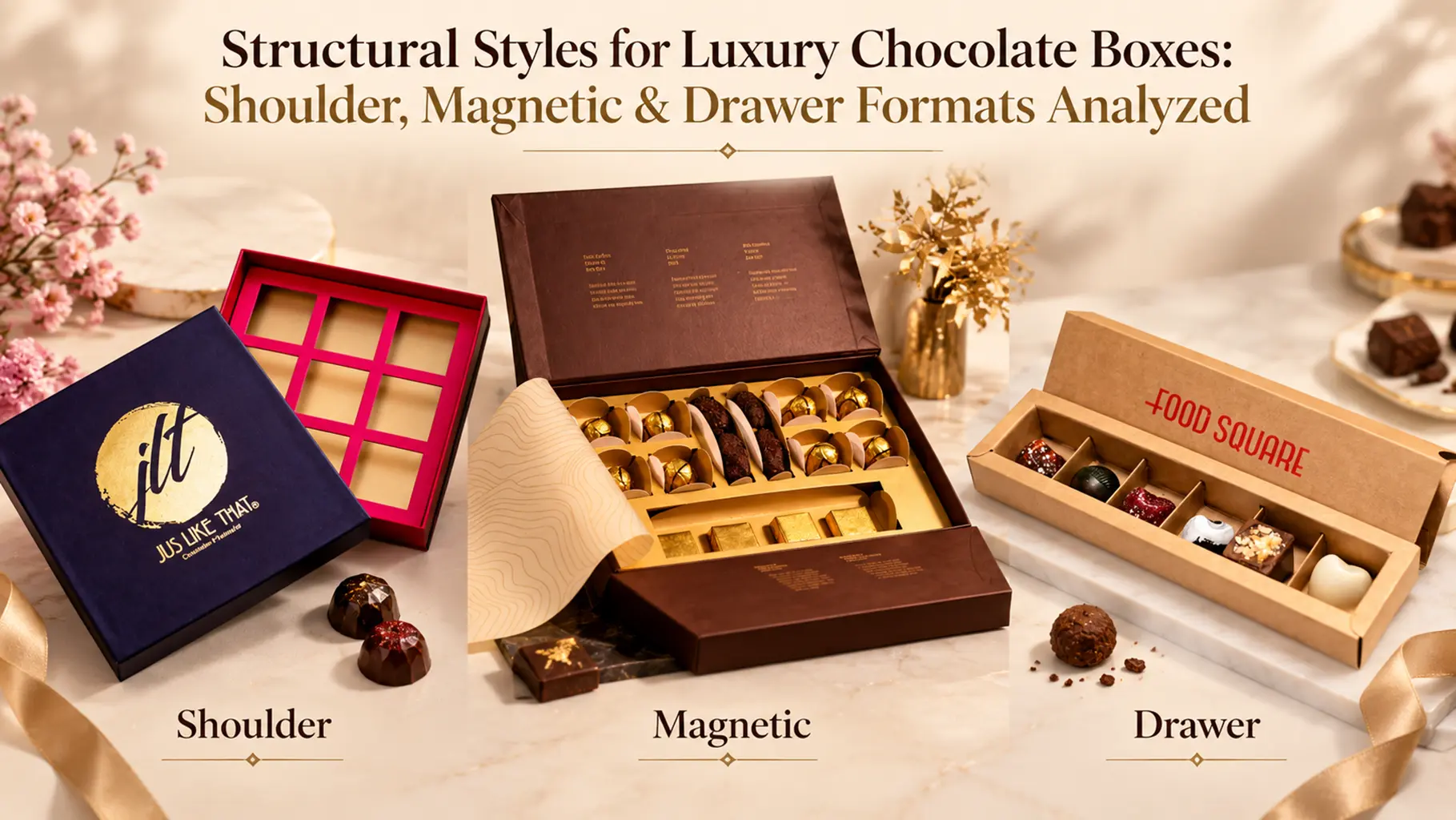
Before a brand chooses colors, finishes, or even the cavity tray inside a chocolate box, there’s a more fundamental decision that shapes everything else: how the box itself opens. Shoulder, magnetic, and drawer construction are the three formats that dominate premium chocolate packaging, and they aren’t interchangeable stylistic choices. Each one changes unit cost, closure security, and the actual experience of opening the box, in ways worth understanding before committing to a production run.
This decision also affects what’s possible inside the box. A drawer format, for instance, often needs its tray designed as part of the same structure rather than as a separate insert, which connects directly to the cavity engineering choices a brand makes for the chocolate itself.
Why Structural Format Is a Strategic Decision
It’s tempting to treat box format as a purely aesthetic choice, whichever looks best for the brand. In practice, it affects three things that matter commercially, not just visually: how much the box costs to produce at volume, how securely it stays closed during handling and transit, and what kind of first impression it creates when a customer or gift recipient opens it.
Shoulder Boxes
A shoulder box uses a two-piece construction: a base with a raised “shoulder” that the lid telescopes down over, held in place by friction fit rather than a mechanism. It’s the most traditional of the three formats, and for good reason, it’s a well-established, reliable construction that reads as classic, heritage-brand luxury rather than modern flash.
The friction fit needs to be calibrated carefully. Too loose, and the lid can come off unintentionally during handling. Too tight, and it becomes difficult to open smoothly, which undercuts the premium feel the box is meant to create. Done well, it’s generally the most economical of the three premium formats, since the construction itself is simpler than either of the other two.
Magnetic Closure Boxes
A magnetic closure box embeds a magnet, usually in the lid, that meets a matching magnet or metal plate in the base, creating a satisfying snap when closed. This format has become increasingly common across premium retail packaging generally, not just chocolate, because the tactile closure moment is genuinely memorable and photographs well for a brand’s own social content.
It also offers the most secure closure of the three formats, which matters directly for anything shipped rather than handed over a counter. The tradeoff is cost: embedding and aligning magnets adds material and assembly complexity that shoulder and even most drawer formats don’t require, making this consistently the most expensive of the three options.
Drawer and Slide Boxes
A drawer format holds the product in an inner tray that slides out of an outer sleeve, creating a distinct reveal rather than a lift-the-lid opening. This format has a particularly strong association with premium chocolate specifically, likely because the sliding reveal mirrors the sense of anticipation associated with unwrapping a gift.
Closure security depends heavily on slide tolerance, similar to the fit-tolerance considerations that matter for chocolate cavity trays: too loose and the drawer can slide open in transit, too tight and it becomes awkward to use. Cost generally sits between shoulder and magnetic construction, though this varies depending on the specific engineering.
Comparing the Three Formats
A side-by-side view of how the three formats actually differ on the factors that matter for a commercial decision:
Factor
Shoulder Box
Magnetic Closure
Drawer/Slide
Relative unit cost
Lowest of the three
Highest
Moderate to high
Closure security
Friction fit, moderate
Strong, stays shut
Depends on slide tolerance
Unboxing “moment”
Traditional, understated
Strong tactile snap
Distinctive reveal
Manufacturing complexity
Lower
Higher (magnet placement)
Higher (slide tolerance)
Best suited for
Everyday premium, heritage brands
Top-tier gifting, e-commerce
Brand differentiation, shelf standout
Which Format Fits Which Use Case
Choose a shoulder box when: the brand positioning leans traditional or heritage, cost efficiency matters at scale, and the box will primarily be handed over rather than shipped through a courier network.
Choose magnetic closure when: the box is going through e-commerce or courier shipping where secure closure matters, or when the unboxing moment itself is part of the brand’s marketing, gifting-tier products especially.
Choose a drawer format when: shelf differentiation matters, competing against other chocolate brands using more conventional lid-based boxes, and the reveal experience is worth the moderate cost premium over a shoulder box.
Many brands with multiple product tiers use more than one format across their range, a shoulder box for everyday premium lines and magnetic or drawer construction reserved for a flagship gifting collection, rather than standardizing the entire catalogue on one format.
A Format Selection Checklist
Confirm whether the box will primarily be handed over in person or shipped, since this changes how much closure security actually matters
Compare quotes for all three formats at your actual order volume before assuming one is automatically more cost-effective
Decide if the unboxing moment itself is part of the brand’s marketing, which favours magnetic or drawer construction
Check how the chosen format affects insert and cavity tray design, particularly for drawer formats
Request physical samples of more than one format before committing, since photos rarely convey the tactile difference
Frequently Asked Questions
Which structural format is most cost-effective at scale?
Shoulder boxes are generally the most economical of the three premium formats, since the construction itself is simpler and doesn’t require embedded mechanisms.
Is magnetic closure worth the extra cost for every product tier?
Not necessarily. It tends to earn its cost back most clearly for top-tier gifting products or anything shipped through courier networks, where secure closure and a strong unboxing moment both matter commercially.
Do drawer-format boxes need a different cavity tray design than lid-based boxes?
Often yes. The tray frequently needs to be engineered as part of the drawer’s own structure rather than as a fully separate insert, which is worth discussing alongside the format decision rather than after it.
Can a single product line use more than one structural format?
Yes, and many premium brands do, reserving a more elaborate format for a flagship or gifting-tier collection while using a simpler, more economical format for everyday products.
Which format holds up best to courier shipping specifically?
Magnetic closure generally offers the most secure fit for transit. Drawer formats can work well too if slide tolerance is engineered carefully, but shoulder boxes rely purely on friction fit, which is more vulnerable to coming open during rough handling. If you’re deciding between structural formats for an upcoming chocolate collection, Get a Quote and we’ll walk through cost, closure, and unboxing tradeoffs for your specific product range before you commit to tooling.