
- Alcohol & Beverages Boxes
- Apparel & Fashion Boxes
- Bakery & Chocolate Boxes
- Ecommerce & Retail Boxes
- Food & Takeaway Boxes
- Health & Beauty Boxes
- Home Decor & Candle Boxes
- Jewellery Boxes
- Perfume Boxes
- PR & Gifting Boxes
- Sweets Boxes
- Technology & Electronics Boxes
- Tea & Coffee Boxes
- Toys & Games Boxes

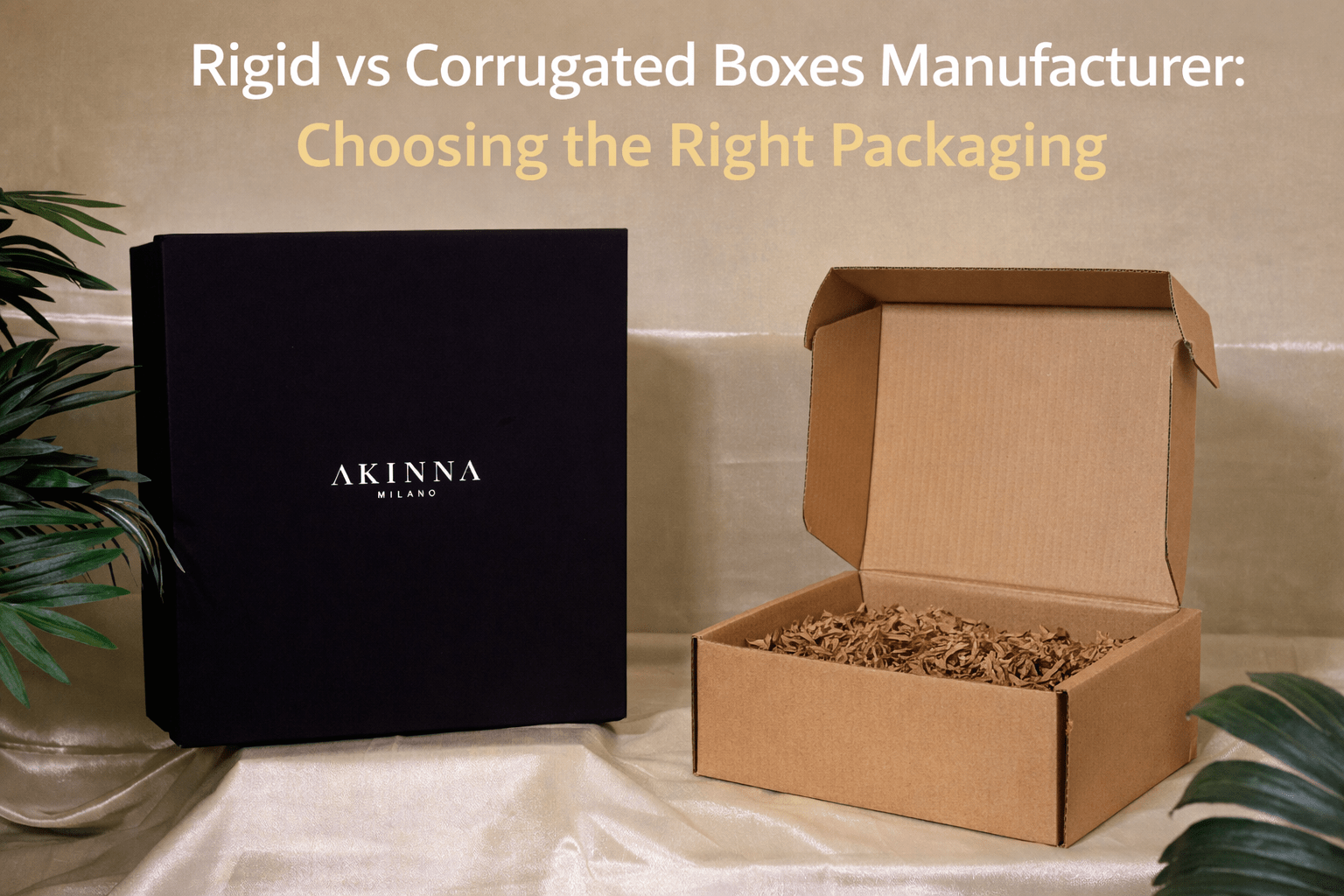
Choosing the right packaging is one of the most important decisions a brand can make. Packaging affects not only product protection, but also brand perception, logistics costs, customer experience, and scalability. For businesses evaluating options between a rigid boxes manufacturer and a corrugated boxes manufacturer, the decision should be driven by product type, brand positioning, sales channels, and long-term growth plans. There is no one-size-fits-all solution what works for one brand may not work for another.
This guide breaks down how to decide which packaging is right for you, using practical industry logic and real-world considerations, while helping you align packaging with your brand and business goals.
Start with Your Product and Use Case
The first step in choosing the right packaging is understanding your product’s physical and commercial requirements. Factors such as weight, fragility, shelf life, and value perception play a critical role. High-value, delicate, or premium products often require stronger structural support and a refined presentation, while everyday or high-volume products prioritize durability, efficiency, and cost control.
If your product needs to create a strong first impression or is positioned as premium, working with a rigid boxes manufacturer may be the right choice. If your product requires safe transportation, stacking efficiency, and scalability across large volumes, a corrugated boxes manufacturer is often more suitable.
Understanding Rigid Boxes: When Premium Matters
Rigid boxes are typically associated with luxury, gifting, and high-end retail products. They are known for their sturdy construction, premium finish, and strong visual appeal. Brands in categories such as electronics, cosmetics, fashion accessories, gourmet foods, and corporate gifting often choose rigid boxes to elevate perceived value.
When sourced from an experienced rigid boxes manufacturer, this type of packaging offers excellent protection and a superior unboxing experience. Rigid boxes are ideal when packaging is part of the product experience itself, not just a protective layer. However, they usually come at a higher cost and are less flexible for high-volume shipping or frequent SKU changes.
Understanding Corrugated Boxes: When Scale and Efficiency Matter
Corrugated boxes are the backbone of modern packaging and logistics. They are lightweight, strong, cost-effective, and highly adaptable. Brands focused on e-commerce, retail distribution, exports, or bulk shipping typically rely on corrugated packaging for its balance of protection and scalability.
A reliable corrugated boxes manufacturer can provide solutions that are optimized for stacking, palletization, and automation. Corrugated packaging is ideal for brands managing large order volumes, multiple SKUs, and diverse distribution channels. While it may not offer the same premium feel as rigid boxes, smart design and branding can still create a strong brand presence.
Align Packaging with Your Brand Positioning
Your packaging should clearly reflect how you want your brand to be perceived. Premium, luxury, and aspirational brands often benefit from rigid packaging that reinforces exclusivity and quality. On the other hand, modern, accessible, or sustainability-focused brands may find corrugated packaging more aligned with their values and customer expectations.
For packaging for brands, consistency is critical. Whether you choose rigid or corrugated, your packaging should align with your brand’s visual identity, tone, and promise. This is where custom packaging boxes become essential, allowing you to tailor size, structure, graphics, and finishes to your brand rather than relying on generic formats.
Consider Your Sales Channels
Sales channels significantly influence packaging decisions. Products sold through physical retail, gifting, or premium marketplaces often require packaging that stands out visually, making rigid boxes a strong contender. In contrast, products sold primarily through e-commerce, B2B distribution, or wholesale benefit more from corrugated boxes that are optimized for shipping and handling.
Brands operating across multiple channels may need a hybrid approach, using rigid boxes for premium SKUs and corrugated boxes for shipping or bulk orders. Working with both a rigid boxes manufacturer and a corrugated boxes manufacturer under a unified strategy can help maintain consistency while meeting different channel requirements.
Think About Cost vs. Long-Term Value
Cost is always a consideration, but it should not be evaluated in isolation. Rigid boxes typically have a higher upfront cost, but they can increase perceived value, justify premium pricing, and improve customer experience. Corrugated boxes offer lower per-unit costs and better scalability, reducing logistics and warehousing expenses at scale.
For custom packaging boxes, the goal is to balance cost efficiency with brand impact. The right packaging choice delivers long-term value by reducing damage, improving customer satisfaction, and supporting growth without frequent redesigns.
Factor in Scalability and Future Growth
Packaging decisions should not only solve today’s needs but also support where your brand is headed in the next three to five years. If you anticipate rapid growth, increased order volumes, or geographic expansion, corrugated packaging may offer better scalability. If your growth strategy focuses on premium positioning, limited editions, or experiential branding, rigid packaging may be more suitable.
For packaging for brands planning to scale, flexibility is key. Choosing a packaging partner that can adapt designs, materials, and volumes as your business grows helps avoid costly changes later.
Sustainability and Responsibility
Sustainability is now a major factor in packaging decisions. Corrugated boxes are often favored for their recyclability and lower environmental impact, while rigid boxes can also be made sustainable through responsible material choices and minimalistic design.
When selecting a rigid boxes manufacturer or corrugated boxes manufacturer, it is important to evaluate their ability to support sustainable practices, material optimization, and compliance with environmental standards. Responsible packaging strengthens brand trust and future-proofs your business.
Custom Packaging Boxes
Whether you choose rigid or corrugated packaging, customization is what transforms packaging into a brand asset. Custom packaging boxes allow you to control dimensions, structure, branding, and functionality, ensuring packaging fits your product and brand perfectly.
For packaging for brands, customization improves efficiency, reduces waste, and creates a consistent customer experience across touchpoints. It also allows packaging to evolve as products and markets change.
Conclusion
Deciding which packaging is right for you is a strategic decision that goes beyond aesthetics or cost. The choice between a rigid boxes manufacturer and a corrugated boxes manufacturer depends on your product, brand positioning, sales channels, scalability needs, and long-term vision. The right packaging supports growth, strengthens brand perception, and improves operational efficiency.
By evaluating packaging through a business and brand lens, you can choose a solution that delivers both immediate impact and long-term value.
Need Help Choosing the Right Packaging for Your Brand?
If you are exploring custom packaging boxes or looking for expert guidance on packaging for brands, The Baxsaa Co can help you identify and design the right packaging solution for your business.
📞 Contact Number: 9820772727
📧 Email: Letsdiscuss@thebaxsaaco.com
🌐 Website: https://thebaxsaaco.com/
Let’s build packaging that fits your product, your brand, and your growth plans.